Insights & Articles by Muhammed AJ
Exploring ideas, sharing experiences, and inspiring meaningful growth through words.
If you graduated from college in India this year, here’s an uncomfortable number: only 42.6% of Indian graduates are considered employable, meaning more than half of all fresh graduates lack the skills required to perform their intended roles without significant additional training. That figure comes from Mercer-Mettl’s India Graduate Skill Index 2025, and it isn’t an outlier — multiple industry reports converge around the same range.
“Employable” here doesn’t mean unqualified on paper. It means something more specific: can this person walk into a role and actually do the job, or does someone need to spend six months un-teaching and re-teaching them first? Employability assessments test things like problem-solving, applied communication, and role-specific readiness — not GPA, not the name of the college, not how many certificates are in the folder. And by that measure, most Indian graduates are still being trained for a workplace that no longer exists.
Why the Gap Exists
The disconnect isn’t a mystery. It comes down to a mismatch between how colleges teach and what jobs actually require: outdated syllabi, minimal exposure to real projects or internships, and almost no structured development of soft skills like teamwork and adaptability. Add to that a workforce statistic that’s easy to miss: the vast majority of Indian adolescents have had no formal skills training at all before entering higher education, let alone the workforce.
So the problem compounds. Students spend years in a system built around exams and memorization, get a degree that certifies they completed the process, and only discover the gap when they’re sitting across from a hiring manager who’s testing for something else entirely.
What Employers Are Actually Screening For
Here’s the part that should change how you think about your own learning: 82% of employers in India report difficulty finding candidates with the right skill sets. Not “no candidates.” Not “no smart candidates.” No candidates with the right skills — which usually means:
Communication — particularly professional communication in English, which remains the working language of most industries
Critical thinking and problem-solving — the ability to reason through something you weren’t handed a template for
Digital literacy — comfort with tools, platforms, and increasingly, AI-assisted workflows
Collaboration and adaptability — working across teams, shifting when the plan changes
Technical roles are actually doing relatively better — employability in AI and machine learning-adjacent roles is improving — while non-technical roles, including HR and digital marketing, are seeing some of the sharpest declines. Even in a field like digital marketing, where the barrier to entry looks low, employers are finding a widening skills shortfall. The takeaway isn’t “become an engineer.” It’s that skill-building has to be deliberate, regardless of the field.
Two Paths, Same Underlying Fix
This gap plays out differently depending on where you are in your journey.
If you’re skills-track (DAM Institute): the fix is stacking real, applied ability on top of whatever formal education you have — or instead of waiting for it. Digital marketing, in particular, rewards visible proof of work over credentials: a portfolio, a campaign you ran, results you can point to. The sooner you start building that proof, the sooner the degree stops being the thing standing between you and a paycheck.
If you’re exam-track (Mentorwise, Class 8–12): the fix is starting earlier than tradition suggests. Civil services preparation is usually treated as something you begin in your twenties, after a degree. But the same foundational skills — comprehension, structured thinking, discipline, communication — take years to build well. Starting that foundation at 14 instead of 24 isn’t about rushing the exam. It’s about not cramming a decade of skill-building into eighteen months.
The Real Shift
Degrees aren’t obsolete. But they’ve quietly stopped being sufficient on their own — and the data backs that up plainly. The graduates and students who’ll be fine over the next decade are the ones treating education as an ongoing, deliberate skill-building process, not a four-year credential they collect and then stop.
That’s the whole premise of this series: what does real, practical education look like when the old signals — degree, marks, rank — stop being enough on their own?
This is Day 1 of a 30-day series on modern education. If you’re building career-ready skills or preparing early for competitive exams, DAM Institute and Mentorwise are built around exactly this gap.
The old way oflearning is dying
Only 42.6% of Indian graduates are considered employable. That’s from the India Graduate Skill Index. Employable doesn’t mean unqualified on paper — it means: can this person walk into a job and actually do it, or does someone have to spend six months un-teaching and re-teaching them first?
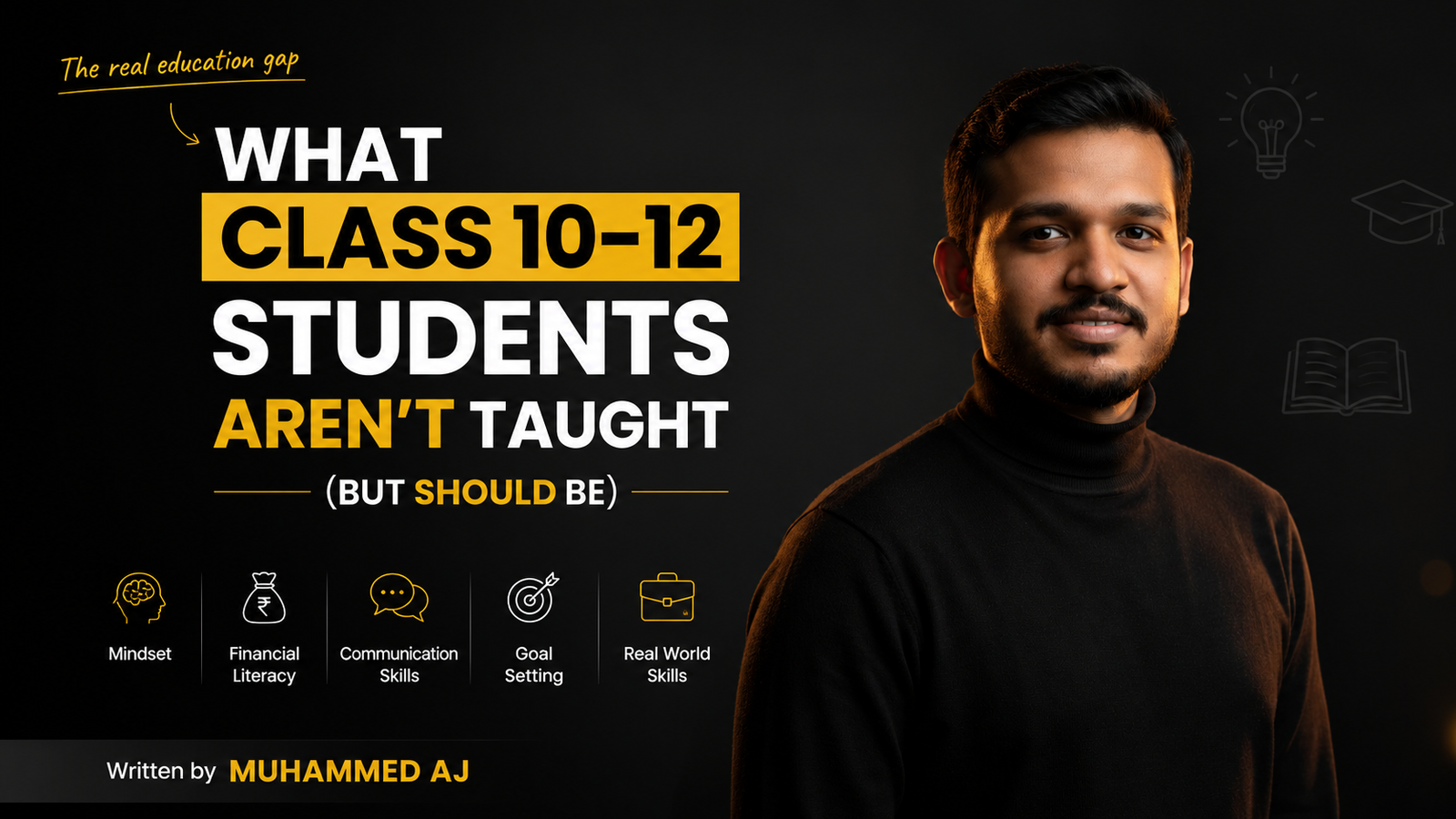
What Class 10-12students aren't taught
Only 27% of Indian adults are considered financially literate — compared to an average of 52% across advanced economies. That gap doesn’t start in adulthood. It starts in school, where personal finance has almost never been treated as a core subject. Multiple studies on Indian high. read more>>>
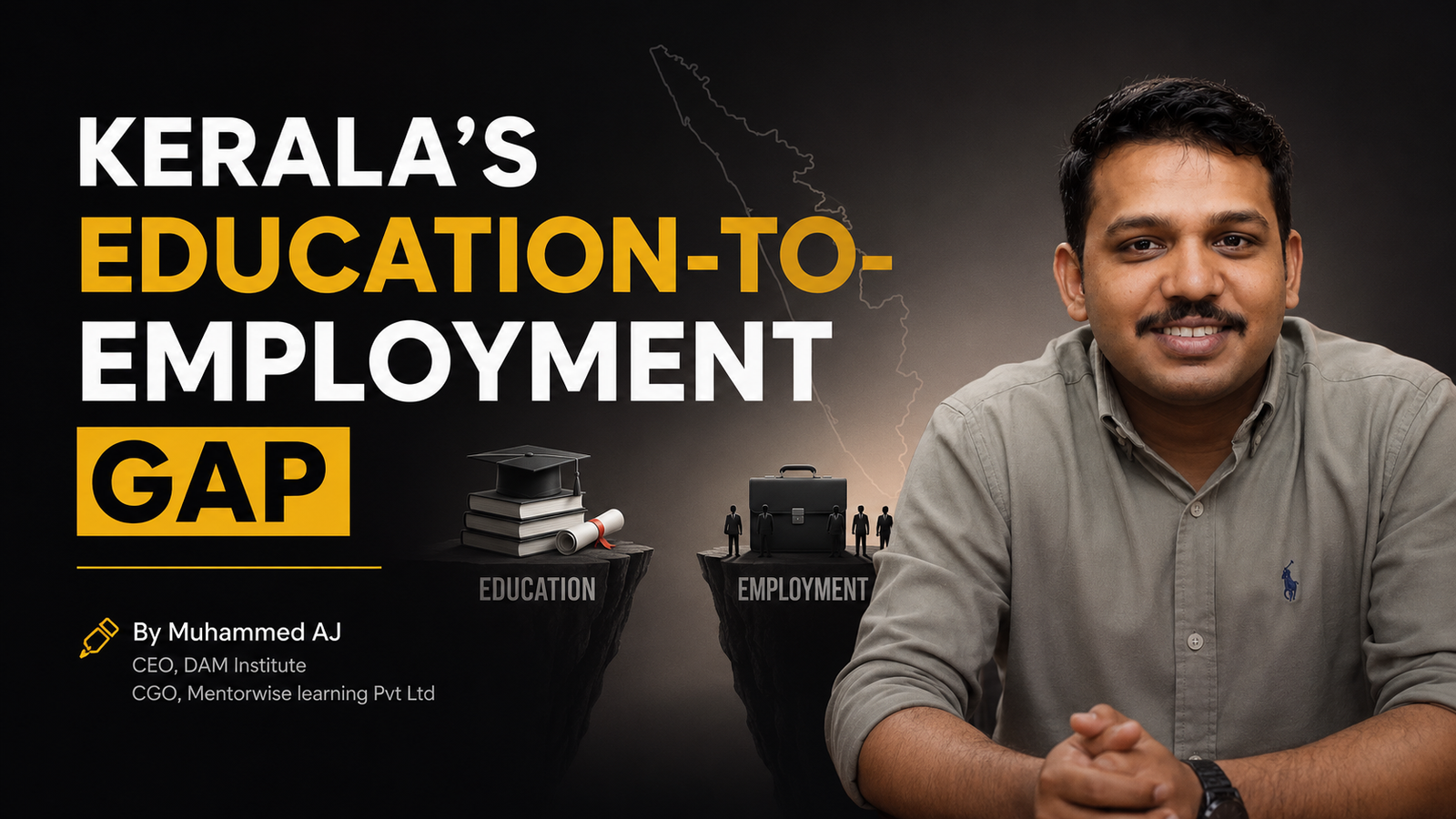
Kerala's educationto employment gap
Kerala built ICT-enabled classrooms in every public school long before most of India caught up. On paper, it’s India’s education success story. And yet, per the Periodic Labour Force Survey 2022-23, Kerala reported a 42.3% graduate unemployment rate — nearly one in every two graduates without a job. read>>>